
Why I'm Studying Hawai'i Like It's Homework (Because It Is)
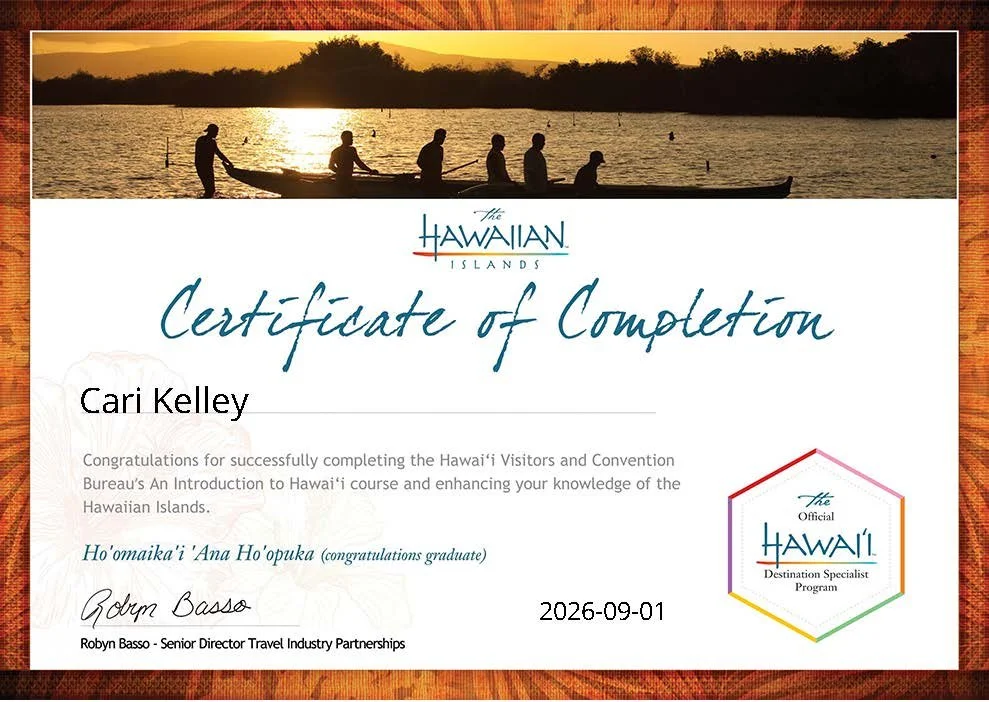
This past week, I completed Certification One of the Hawaiian Destination Specialist Program through the Hawai'i Visitors and Convention Bureau. In a few weeks, I'll dive into the second, more in depth level.
Here's the honest truth: nobody requires me to do this. I could plan a Hawaii trip using a good map, a few blogs, and confidence. But I don't think that's what you're paying for when you work with me, and I don't think it's what makes a trip actually transformative.
Expertise You Can Feel, Even If You Never See It
When a client tells me they're dreaming of Maui, I want to know more than the resort names. I want to understand which beaches are calm enough for someone with mobility challenges, which islands move at the slow, restorative pace a caregiver desperately needs after months of putting everyone else first, and which experiences honor Hawaiian culture instead of flattening it into a postcard.
That kind of knowledge doesn't come from a five minute search. It comes from sitting down and actually learning the place, its history, its people, its rhythms, so that when I build your itinerary, every recommendation has a reason behind it.
Why This Matters for Your Trip
Destination specialist training isn't a resume line. It's the difference between an itinerary that looks nice on paper and one that actually gives you the space to breathe, reflect, and come home changed.
It means I can steer you away from the tourist traps and toward the hidden gems. It means I understand the cultural context behind an experience, not just the price tag. And it means that when you're overwhelmed by the sheer number of options for a Hawaii trip, you have someone in your corner who has done the deep work so you don't have to.
I'm already putting this training to work. Right now I'm building an itinerary for a family traveling together to Oahu this Thanksgiving, three generations, from grandparents to teenagers, all under one roof for a week. That kind of trip lives or dies on the details: knowing which beaches are calm enough for slower mornings, which excursions can flex for different energy levels, and which experiences will actually mean something to a family sharing a holiday together instead of just filling a schedule. That's the kind of planning destination expertise makes possible.
This is what I believe travel advising should be: not booking, but bridging. Bridging you to a place, to a deeper understanding, to a version of your trip that feels like it was actually made for you.
Certification Two is next. I'll keep you posted.
Space to breathe. Time to reflect. Travel to transform.
